


Your cart is currently empty!
Search results for: “R”
-

How to Dispose of Hazardous Waste
Most homeowners accumulate, over the years at least a few things are going to require special methods of disposal. Unlike your basic toss-outs or recyclables, hazardous waste can be harmful to people, animals, and the environment if not disposed of properly, making it extra important to get rid of these sorts of materials the right way.
Below are a few tips regarding how to dispose of hazardous waste safely.
What items are considered to be household hazardous waste?
You’d be surprised to learn that you probably have a lot of these substances in your home already.
- Combustible and flammable materials. Substances that ignite and burn easily.
- Spare cans of gasoline
- Propane tanks
- Oxidizers
- Liquid with a flashpoint of less than 140 degrees Fahrenheit.
- Corrosive materials. Substances—usually liquid—that can corrode metal.
- All industrial strength cleaners
- Items that contain common strong acids such as hydrochloric acid or sulfuric acid – like drain cleaners
- Reactive materials. Substances that are unstable and prone to possible explosion.
- Aerosol cans
- Toxic materials. Substances that can be seriously harmful or even deadly upon contact, consumption, or inhalation.
- Paint
- Antifreeze
- Motor oil
- Weed killers
How to dispose of hazardous waste
- Research the laws of hazardous waste disposal where you live. Different counties have different rules, so read up on them before you do anything else. Simply search “how to dispose of hazardous waste” + “[your county]” to see what comes up.
- Read the product labels. Many household hazardous materials come with general directions about how to (and how not to) store and handle them.
- Schedule a home pick up. Contact your local waste management company and ask them if they offer home pick ups for hazardous materials. Many do, though you may incur a fee.
- If they don’t do home pick-ups, your local waste management authority might be able to recommend drop off services.
- Many waste management facilities are hazardous waste mail-in recycling kits. These kits are especially useful if you live in an area without home pick-up services. With the mail-in service, the company will mail you a special container to put your hazardous items into. Then you just mail it back. This is useful for properly disposing of used batteries, fluorescent bulbs, and printer cartridges—all of which cannot be simply thrown in the trash or recycling bin.
- Donate. If you can, try to donate your hazardous materials to somebody else who needs them. If you have leftover paint, for example, you may be able to donate it to Habitat for Humanity or a charity that is remodeling their facilities. And your local nursery may be able to put your extra fertilizer to use, while the auto garage can possibly take leftover motor oil.
Other tips for disposing of hazardous materials
- Keep materials in their original packaging. Certain hazardous materials pose a heightened threat when exposed to air or when moved into another type of container than they came in, so always stay on the safe side and leave these types of substances in their original containers.
- Handle empty containers with care. Chemical residue on the insides of containers can pose a hazard even after the material itself is gone. If you have empty hazardous waste containers, they’ll have to be disposed of just as carefully as if they still had product in them.
- Combustible and flammable materials. Substances that ignite and burn easily.
-

Safety at Home – Your Kitchen
The kitchen is the heart of the home, but when you break it down, it’s full of sharp knives, hot surfaces, heavy appliances, and breakables.
Below is a list to consider to make your kitchens safer:
Fire Extinguishers
Home fires are more likely to start in the kitchen than any other room in the home. Even the best cook can have flare-ups. Whether you leave something on the stove too long, a curtain comes too close to toaster, or a grease fire spirals out of control, it’s smart to have a fire extinguisher on-hand.
Equipment and Utensil Safety
Keeping pot handles turned in toward the stove, sharp knives stored properly, and flammable objects away from hot surfaces are all basic safety measure in the kitchen.
Baby Proofing
Kitchen cabinets are full of chemicals that can poison, and hinges that can pinch. To prevent kids from getting hurt in the kitchen, use a gate to keep them out, or install door and drawer locks, so kids can’t get into anything harmful.
Video Cameras
Indoor cameras have many uses. People love to use them as pet-cams to check on both pets and kids at home. Many cameras have a two-way voice function so you can speak real-time through the camera. Even better – when the camera detects motion, you’ll get a notification with a clip on your phone. EMC Security’s cameras are just $79. Take a look here.
-

Glassbreak Detector
Powerful sensors that hear the sound and feel the vibration of glass breaking to trigger your alarm. Use in place of window sensors.
-

Safety at Home – Your Bathroom
The CDC reports that over 230,000 people (15 years and older) visit emergency rooms every year due to injuries that happen in bathrooms—and 14 percent are admitted for prolonged hospital stays. Injuries include burns, falls, and near drowning.
In order to stay safe, here’s what to look out for in the bathroom:
Tub Safety
It should be common sense but bares repeating – child bath-time is for splashing, playing, and getting squeaky clean, but it should never be done without supervision. Children can drown in a matter of minutes in as little as two inches of standing water. So if you’re filling up the tub or letting it drain, stay in the bathroom until it’s empty.
Many seniors also have accidents in the tub. Most falls occur while seniors are transferring in and out of the tub or shower. You can eliminate the risk with these safety features:
- Install grab bars in the shower, beside the tub and at the toilet.
- Place a non-slip mat or decals on the floor of the shower or bathtub and a non-slip rug on the floor outside the tub or shower. Non-slip mats – rather than fluffy rugs – are also the way to go in front of the toilet and the sink.
- Use a shower chair so your senior can sit while showering and prevent slips and falls. Make sure the chair has a non-slip seat and rubber tips on the feet so it won’t slide in the shower or tub.
- For seniors who need assistance stepping out of the tub, a bath or transfer bench can help. The bath bench extends over the side of the bathtub with two legs resting on the floor. Seniors can sit on the bench, swing their legs over the side of the tub, and more safely stand.
- Use a nightlight or motion-sensor lighting to ensure seniors have adequate light for nighttime visits to the bathroom. Use a nightlight in any hallway along the path to the bathroom from the bedroom or living areas.
Many seniors and elderly purchase a Medical Alert pendant – a water-proof button that will connect with emergency personnel, contact family members and off peace of mind. Learn more about this life-saving device here.
Scald Guard
Keep kids and yourself burn-free by installing scald guards on all of your home’s sinks and tubs. Scald guards are built into the plumbing to control water temperature, so your faucets don’t become boiling water dispensers.
Hazardous Chemicals
Use child-proof locks on all cabinets that contain cleaners or anything that can harm a child.
Toilet Safety
If you have little ones, always keep the toilet seat down and secured with a toilet seat lock. They can fall in and drown if they’re small enough. Plus, a toilet is full of icky germs you definitely don’t want them touching.
For elderly, Install a raised toilet seat, which raises the seat height by 3 to 4 inches to reduce the amount of effort needed to sit and stand when using the toilet.
Flood Sensors
Bathrooms are the number one source of flooding because of toilets, sinks, and showers.
Catching a leaky pipe or massive burst before it becomes catastrophic will save you time, money, and a major headache. That’s where flood sensors come into play. Most are equipped with smart technology, so you get an alert on your phone if it detects water.
-

Safety at Home – How Safe is Your Bedroom?
The average American spends almost eight hours sleeping every day. Since most people slumber in their bedrooms, make sure it’s safe and sound.
Below are ways to keep your bedrooms safe:
Child-proof Window Locks
According to SafeKids.org, approximately 14 kids in America are hospitalized every day for falls out of windows. Unintentional falls are the number one cause of non-fatal injuries for kids. Even if you have screens in your windows, they’re not meant to bear the weight of children—or even pets. To prevent your child from falling out of an open window, install child-proof window locks.
Fire Escape Ladders
We spend one-third of the day asleep in our bedrooms, so you have a 33 percent chance of being there when a fire breaks out. If you’re on the ground floor, you can escape through a window, but if you need to climb down from a second or third-story bedroom, a fire escape ladder can save the day. Follow our guide to make a fire escape plan and evacuation route to increase your preparedness for emergencies like these.
Smoke Detectors
A fire can be deadly at any time of day, but particularly at night. It’s recommended you place a smoke detector outside of every bedroom. Monitored smoke detectors offer even greater protection – and EMC Security monitors for fire at no additional monthly cost. EMC Security will take care of getting you the help you need, while you take care of getting your loved ones to safety.
Security Cameras
Jewelry, heirlooms, and other valuables are often kept in the bedroom. For this reason, the master bedroom is the first place a burglar goes when intruding in a home. Install a security camera just inside or outside the door to capture the scene on video. If you make it visible enough, the intruder may change his mind and vacate so they aren’t caught on video.
Home Safe
Lock up your valuables in a safe. Make sure it’s heavy and difficult for an intruder to carry.
-

10 Most Dangerous Cities in Georgia – Updated for 2020
Based on the latest FBI crime stats for Georgia (2018 Crime in the United States Report), below is a list of the most dangerous cities in Georgia.
The list ranks Georgia cities with over 5,000 people and is based on a ratio of both violent and property crimes per population.
Be safe out there – no matter where you are!
City Violent Crime (per 100k) Property Crime (per 100k) Notes 1. East Point 1,242 12,004 You have a 1 in 7.5 chance of being a victim of crime in Eastpoint, with property crime being the highest in the state. 2. College Park 1,037 6,884 The home to Hartsfield Jackson Airport. Unemployment is over 10% and poverty at 31%. 3. Eastman 833 8,634 You have a 1 in 11.6 chance of being robbed in Eastman. Unemployment and poverty are both high. 4. Americus 856 6,065 Home to Habitat for Humanity’s international headquarters, Rosalynn Carter Institute, and the famous Windsor Hotel. 5. Hapeville 741 11,154 With a population of just under 7,000 this small city’s crime has held steady in recent years. 6. Albany 1,114 5,102 Albany has a high violent crime rate – 3rd in the state. 7. Brunswick 1,065 5,246 While violent crime in the coastal town of Brunswick is declining, it still ranks 5th in the state. 8. Griffin 1,149 4,756 With a poverty rate of almost 31%, violent crime in Griffin is 2nd in the state. 9. Dublin 806 4,912 Crime really spiked in Dublin in 2017 and has since become a real problem. 10. Warner Robins 586 5,550 Residents in Warner Robins have a 1 in 18 chance of being the victim of a property crime. Job growth is negative with most of the crime contained to the southern end of the city. Rounding out the top 20:
11. Vidalia
12. Forest Park
13. Riverdale
14. Fort Oglethorpe
15. Atlanta
16. Swainsboro
17. Monroe
18. Fitzgerald
19. Morrow
20. Conyers
Are you surprised about any on this list? Do you live in any of these cities? Stay safe…we can help.
Need something positive to chew on? Check out the 10 Safest Cities in GA here.
Data: https://www.roadsnacks.net/data/dangerous/ga.csv
Get Started Today!
Complete and submit this form and an EMC Security specialist will follow up.
-

Safety at Home – The Halls of Your Home
Are the hallways in your house considered to be necessary but wasted space? Hallways get us from Point A to Point B, but they can do much more for home security and household safety.
Three safety measures to consider in your hallways:
1. Smoke detectors
The National Fire Protection Association reports that nearly 3,000 people died in structure fires per year, 60% of them didn’t have smoke alarms. Smoke alarms are essential for detecting life threatening fires, and could mean the difference between life and death. Even better, monitored smoke alarms – reduce the risk greatly. EMC Security monitors for fire at no additional monthly cost.
It’s recommended you place a smoke detector outside of every bedroom and on every floor of your home, so hallways are an ideal place to install them.
2. CO Detectors
Cars, gas stoves, and other appliances emit poisonous, odorless carbon monoxide gas that can knock you unconscious and kill you. Carbon monoxide detectors can save your life. Install one on every floor in your home—including the basement and garage.
3. Baby and Pet Gates
Keep kids and pets out of harm’s way—and out of rooms that are off-limits—by installing gates. Depending on your needs, choose gates that span large spaces, protect kids and animals from falling down the stairs, or that are aesthetically pleasing.
-

Safety at Home – Your Basement
I think we can all agree – no two basements are alike. Whether your basement is a livable space or rough around the edges, it’s important to keep in mind that basements require a little extra attention than the main living areas of your home.
Below are some tips for basement safety.
Flooding
Basements are a magnet for moisture and flooding. Many homes store the water heater, which can leak after so many years of service. Protect against costly damage with a flood sensor or water bug. You’ll be alerted when any water is detected.
Radon Detection Kits
Radon is a radioactive gas that comes from the soil. Radon is the second leading cause of lung cancer after smoking, and since it’s odorless and invisible, it’s impossible to detect without equipment to test for radon in the house. If levels are higher than what’s deemed safe, you can hire a radon remediator.
Carbon Monoxide
Anything that burns emits carbon monoxide—that includes your furnace and hot water heater. It’s important to install carbon monoxide detectors in your basement, otherwise this odorless, invisible, and poisonous gas accumulates undetected. EMC Security monitors for carbon monoxide at no additional monthly cost.
Storage Areas
Basements are a stockpiling station for our excess belongings. If you have shelving for storage, double check weight limits, so your stuff doesn’t come crashing down onto your kids, pets, or yourself. Proper storage of hazard materials such as paint and aerosols is crucial to prevent fire and poisoning.
Burglary Prevention and Detection
Basements doors and windows are popular areas for intruders to enter a home. Ground floor doors and windows (including those in the basement) should be protected with entry sensors that communicate with the alarm system. If a door or window is opened, the alarm will alert you, and authorities can be dispatched. EMC Security offers alarm systems for as low as $99 down.
Contact us today to get started.
-

EMC Security Referral Program
We understand the importance of having a company you can rely on and would like the opportunity to offer the same level of protection and professional service to your friends and family.
And now, refer a friend between now and February 29 and get 2 months free if they become a customer. We’ll also give your friend 2 months free to get started.
Complete the form below to refer your friend now:
-
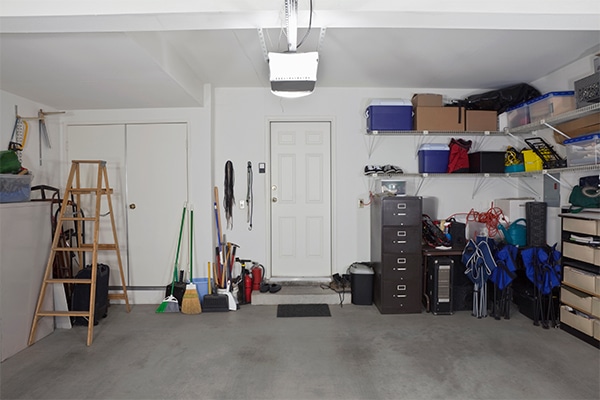
5 Garage Safety Tips
Garages are home to our cars, lawn mowers, and—usually—lots of chemicals. Depending on how you secure your garage, it can be easy prey for burglars and for fire.
Below are some tips for garage safety:
1. Garage Door Locks
Garage doors are often overlooked when it comes to home security. Always remember to your garage door closed – even when you’re home. But sometimes, that’s not enough. Tech-savvy thieves can break into automatic garage doors in under six minutes if given the chance. Prevent intruders from getting into your garage by adding a smart plug that you control from your mobile phone.
2. Hazardous and Flammable Materials
If you do have to keep hazardous materials on-hand, store them high up on shelves away from children and direct heat sources. Read more about what constitutes a hazardous material to determine the best way to store and dispose of items.
3. Carbon Monoxide
Carbon monoxide is an odorless, poisonous gas that’s produced when you burn coal, wood, charcoal, oil, kerosene, propane, and natural gas. Carbon monoxide becomes deadly when confined, so you should never leave a car running inside of the garage. Without proper ventilation, toxic levels of carbon monoxide build up, seep into your home, and cause illness or worse.
4. Car Security
Protect your car while it’s parked in the garage or driveway with the help of steering wheel locks and car alarms.
5. Door to the House
Protect the garage door into the house with a security system that will sound the alarm and notify you when the door sensor is triggered. This is the best way to deter would be thieves from entering your home if they happen to breach your garage.