


Your cart is currently empty!
Search results for: “R”
-

Google and Alexa Security Controls
EMC Security’s newest wireless systems, Connect+, give customers the convenience to arm and disarm the system using Alexa or Google Home.
How to use Amazon Alexa with Connect+
The Alula Alexa Security Skill allows users to operate theConnect+ securitysystem with voice commands through their Alexa-enabled devices.
To get started first add Alula to your Alexa by installing the Alula Skill.
1. Download and Open the Alexa application on your smartphone.
2. Select “Skills & Games” from the slide out menu on the left of the screen (tap the 3 parallel lines on the top left corner to expose menu)
3. Search for “alula” without quotes. Tap the Alula app from the list that appear then tap “Enable” to add the Alula Skill to your Alexa.
4. Sign in with your Username and Password that you use with the Alula app.
Once Skill is added Alexa will now be able to react to the “My Security System” command. The basic pattern is to say “Alexa, ask/tell My Security System to…” Some specific example as are as follows.
-
- Alexa, ask My Security System to arm to stay.
- Alexa, tell My Security System to arm to away.
- Alexa, tell My Security System to arm to night.
- Alexa, ask My Security System for status.
- Alexa, ask My Security System to disarm using 1,2,3,4 (you may use any valid code for your panel).
How to use Google Home with Connect+
Install the Google Home app for iPhone or Android
Press the “+” symbol in the upper left
Click “Set up a device”
Choose “Set up new device”
Choose “Have something already set up?”
Scroll down to “Alula Security” and click it
Sign into your Alula account with your Username and Password
You’ll see a list of all your Smart Home devices.
Click on all of the Smart Home devices you want to add.
Navigate back to the home screen and find the microphone button in the bottom middle of the screen.
Press the microphone button and speak to enter Google Home commands for your Smart Home devices.
You can say phrases such as:
- “Set my Connect Plus to stay”
- “Set my security system to stay”
- “Set my security system to away”
- “Set my security system to night”
- “Disarm my security system” (Google will ask you for the pin)
- “Disarm my Connect Plus” (Google will ask you for the pin)
- “Is my system armed?”
- “Is my Connect Plus armed?”
- “Is my front door open?”
- “Are my doors open?”
You can give other household members access to the connect plus in two steps
- Make sure connect plus and sensors are added to a “home” in the Google Home App
- Use the Google Home App toinvite home member to the “home”
-
-

Mobile Emergency Alert FAQ’s
What makes Belle different from other mobile personal emergency response systems?
Belle users can do what they love, with the confidence of knowing they can press one button to get help at home and away, anywhere in the US where there is AT&T 3G coverage. Belle connects users with call center specialists, who can send emergency personnel or loved ones to the user, depending on what is needed. If users need to be located in an emergency, specialists can connect their Belle device to 911 to utilize U-TDOA location technology. Order Belle Now!
How does Belle work?
When you press and hold the call button, you are connected with a trained call center specialist. You can speak with and listen to the specialist through the powerful built-in microphone and speaker. The specialist will assess the situation and will send EMS, loved ones or neighbors to help you, depending on what is needed.
What accessories come with Belle?
Belle purchases include a charging cradle and lanyard.
Does Belle work in the shower?
Yes, Belle can be used in the shower. However, it is not designed to be submerged in water.
Who can I contact with the Belle?
When you press the call button, you will be connected with a call center specialist. The
specilist can send EMS, relatives or friends to you, depending on what is needed.. How long does the Belle battery last?
The rechargeable Belle battery lasts up to 30 days between charging. You and your loved ones can receive
text message and email alerts when Belle needs to be charged and powers off. You may also receive a phone call from a specialist when the Belle battery is low. Belle should be charged for 3 hours every 30 days.How do I charge Belle?
To charge Belle, rest it on the included charging cradle with Belle’s lanyard at the top of the cradle near the charging cord and Belle’s status lights down near the light on the bottom of the cradle. The red battery light will flash every 2 seconds while Belle is charging. When Belle is fully charged, the battery light will be solid red.
How do I know Belle is working?
When Belle is on and working normally, the blue call light will flash every 5 seconds after a call (until the device goes into standby mode) or if charging, and the battery light will not be on.
Can caregivers call Belle?
Caregivers cannot call Belle devices because Belle devices are off until the call button is pressed, to conserve battery. Belle users can press the button and ask the call center specialist to call a caregiver, neighbor or relative in a non-emergency situation.
Will Belle interfere with my medical equipment?
Belle is essentially a cell phone. If you have a pacemaker, review your pacemaker materials regarding interaction with cell phones, and take the same precautions the materials recommend with this device.
How much does the Belle unit weigh and what are the dimensions?
It weighs 2 oz. and measures 2.7” x 1.7” x 0.7”.
How often should I test Belle?
It is recommended that you test Belle once a month.
To test, press the call button until call light turns blue.
After a short delay, you will hear tones or ringing.
Specialist answers your call.
Tell
specialist you are testing.If the device dials 911, tell the operator you are testing and that the operator can disconnect the call.
How do I purchase the Belle?
Belle is only $129.00 and $21.95 per month. Contact EMC Security at 770-963-0305 to order today. Order online here.
.
-

5 Ways a Medical Alert System Can Help Your Loved Ones
Everyone knows someone that could benefit from a medical alert pendant.
Here’s why:
1. A fall in the shower—We recently received a personal emergency two-way pendant alarm from a customer. She had fallen in the shower and although she was not injured, she couldn’t get to her feet. With the shower noise, family in the house could not hear her cries for help. She pushed her pendant and the operator called the daughter in the house, who was there in moments to help.
2. A gardening accident—Shears can cause serious injury if they slip in the gardener’s hands. And if he or she is standing on a ladder to trim trees or shrubbery, they are at risk from a fall. However, if the gardener is wearing a medical alert pendant, help is only a touch away. The operator can stay
on line 3. Walking to the mailbox—Even a simple trip to check the mail can trip up someone with mobility issues. If the driveway is long, steep, or graded on an uneven surface (such as a dirt drive, common in outlying Atlanta counties) it can become a dangerous walk if someone takes a tumble.
4. Kitchen and Laundry room fires—Our latest blog on laundry room fires
highlights the dangers that can exist without proper maintenance of the washer and dryer—something that might be difficult for someone with limited mobility. In the kitchen, gas and electric fires may ignite if appliances are left unattended. A two-way medical pendant gives the resident immediate access to an operator who can get help quickly.5. If someone cannot speak—A medical emergency that renders the victim unable to speak is frightening. A stroke, fainting spell or even choking may mean that there is no opportunity to call for help. However, with a medical alert pendant, the victim can press the call button, and even if they cannot tell the operator what is happening, the operator will still dispatch help and remain on the line until he or she has confirmed that emergency personnel
have arrived and the victim is being assisted.If you’ve imagined one of these scenarios in your head for a loved one that lives apart from you, it might be time to talk about an extra level of care and security. Amedical alert systemwill allow them to thrive in their own home, and it can give you peace of mind.
-
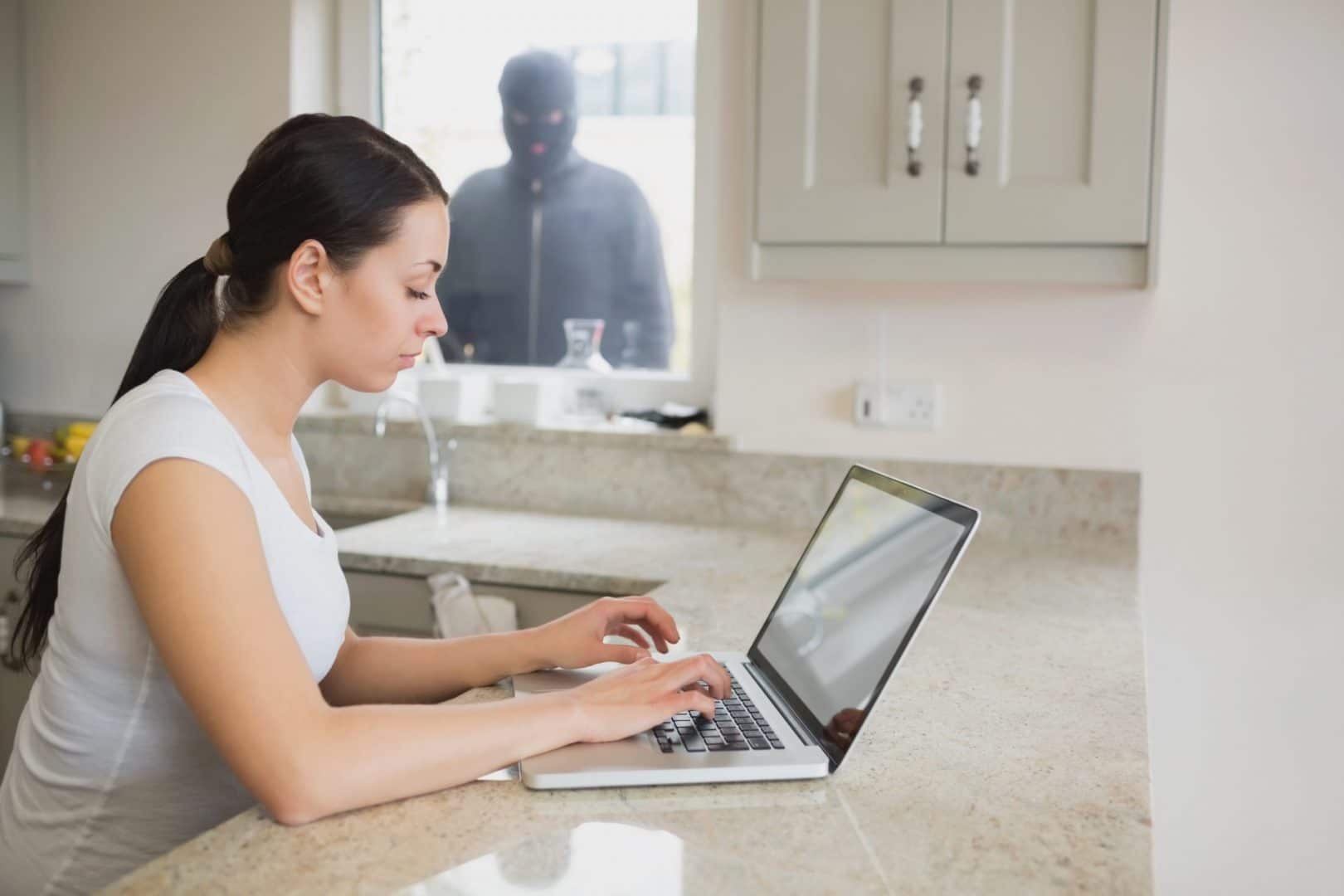
What To Do If You’re Home During a Break In
There’s alot to consider when purchasing a home security system. The doors and windows, cameras, and downloading the mobile app. But one thing you should consider and plan for is – what if the alarm actually goes off when you’re home? What if someone is breaking in? What should you do while the alarm is going off?
No matter what, don’t put yourself in danger. It’s a really bad idea to confront a burglar. You don’t know if they are armed or not
so try to make the safest decisions. Your job is to protect yourself and your family.Here’s how:
- Shh…BE QUIET! Don’t alert the intruder that you are in the house. At this point, the best plan
it to quietly find your phone so you can make some calls.
- If Your Alarm Panel is Nearby (assuming it wasn’t armed), Press the Panic Button. This will make the sirens to go off and will immediately alert the authorities that you need help. It could also scare the burglar off.
- Find a Way to Get Out of There. If you can escape safely, do it. Try and identify where the intruders are and then leave through a door or window as far away from them as possible.
- Lock Yourself in a Safe Room. If you can’t exit your home safely, then lock yourself in a room, barricade the door so that the burglar can’t enter even if they are able to unlock the door.
- Call the Police. If you don’t have a security system or can’t get to the panic button, make the call as soon as possible.
- Wait. Don’t leave the safe room until the police give the all-clear.
What If You Encounter the Burglar?
- Don’t be a Stupid-Hero. Let them take whatever they want as long as they leave you and your family alone. The sooner they get what they want, the sooner they’ll leave. Never try to stop a burglar from taking anything because you don’t want to trigger any violence.
- Don’t provoke them. This can be difficult when you are feeling violated. But don’t initiate physical violence to catch a burglar. Stay as far away from a burglar as possible. You should only fight back if you are attacked.
- Get a good look. As discreetly as possible, take mental notes of their physical features (height, build, hair, eye color, ethnicity, distinct markings) and mannerisms (accent, walking style) so you can provide the details to the police.
Knowing what to do during a home intrusion is vital to your safety and that of your family. By installing a home security system, you could avoid a frightening and potentially life-threatening situation. Contact EMC Security today for a quote and/or free home evaluation at 770.963.0305.

- Shh…BE QUIET! Don’t alert the intruder that you are in the house. At this point, the best plan
-

Why You Need Fire Monitoring More Than You Realize
A fire can happen in an instant.
A spark ignites into a flame; a flame erupts into a blaze; a lifetime of memories and hard work goes up in smoke; literally.
Unfortunately, EMC Security knows all too well that fire happens – even to those who think it won’t happen to them. Countless fires around Georgia start in ways home and business owners weren’t prepared for or didn’t guard against. And the result of an unchecked blaze raging through a structure is most often devastating, even with insurance.
Ask anyone who has dealt with the aftermath of a fire and they will tell you of hardship, heartache and, many times, regret. One of the biggest regrets for most is not having proper fire detection methods installed or having no one to monitor those methods.
Fire Detection Systems
Fire protection through EMC Security is a simple addition to your comprehensive alarm monitoring service.
Adding smoke or heat detectors to your home security system may very well be the best decision you make when it comes to the safety and security of your loved ones. Our 24/7 monitoring center team is technically trained to handle the detection of a fire in a way that minimizes its effect. Faster detection results in faster emergency response times.
Protect Your Business
But fires don’t just happen at home, which is why our business services are equally comprehensive. In compliance with the increasingly complex local, state and national fire codes for businesses, we protect your assets so you can feel a little more secure. Our team of security experts will ensure that your facilities are safe and in compliance with rapidly changing and increasingly complex local, state, and national requirements. As part of our inspection process, we will thoroughly test and inspect all components in accordance with NFPA standards.
The best part about our fire alert service is that your monthly monitoring cost doesn’t change when you add it to your security system with EMC Security.
Contact EMC Security to protect your home and everything you love inside, from the threat of fire today.
-

Fire Safety for Pets
Our pets are part of the family and are just as vulnerable to fire as we are.
Below are a few tips to protect them in case of fire:
PREVENT YOUR PET FROM STARTING FIRES
Extinguish open flames – Ensure your pet is not left unattended around an open flame and make sure to thoroughly extinguish any open flame before leaving your home.
Remove stove knobs – A stove or cook-top is the number one piece of equipment involved in your pet starting a fire.
Invest in flameless candles – These candles contain a light bulb rather than an open flame and take the danger out of your pet knocking over a candle.
KEEP YOUR PETS SAFE
Keep Pets Near Entrances When Away From Home – When leaving pets home alone, keep them in areas or rooms near entrances where firefighters can easily find them.
Secure Young Pets – Especially with young puppies, keep them confined away from potential fire-starting hazards when you are away from home such as in crates or behind baby gates in secure areas.
Affix a Pet Alert Window Cling – Write down the number of pets inside your house and attach the static cling to a front window. This critical information saves rescuers time when locating your pets.
Since Pets Left Alone Can’t Escape a Burning Home – Consider using monitored smoke detectors which are connected to a monitoring center so emergency responders can be contacted when you’re not home. Once fire and smoke detectors are in place, EMC Security monitors for
fire at no additional charge. -

EMC Security Medical Alert Pendant Saves Another Elderly Customer!
The EMC Security monitoring center received a medical alert alarm from the pendant worn by a customer here in Georgia.
The customer is a 90-year old woman who lives alone.
After falling and lying on her kitchen floor, she needed help. She immediately pressed the button on her Medical Alert pendant. Speaking directly into the pendant, she was able to tell the medical monitoring center operator what happened. While on the line with one monitoring center operator, another operator was able to send emergency medical response teams to the customer’s home and contact her family members. Fortunately, the customer was fine. She has the EMC Security Medical Alert System that saved her from what could have been a terrible fate.
As our population ages, the prevalence of falls among older adults is increasing. According to the Centers for Disease Control and Prevention, more than one in four older adults report a fall each year. In 2017, 31,190 older adults aged 65 and older died from preventable falls, and more than 3 million were treated in emergency departments.
Over the past 10 years, the number of older adult fall deaths has increased 58%, while emergency department visits have increased 40%. At the same time, the number of fall deaths among individuals younger than 65 increased 20% but the emergency department visits have decreased 13%.
The EMC Security Medical Alert System gives elderly loved ones the help they need when they need it, as well as giving the family members the peace of mind they deserve. Order on our website today!
-

Should I Add Glass Breaks To My System?
Glass breaks can be an important addition to your home security system.
Glass breaks are sensors that detect the sound frequency and percussion of glass breaking and send the signal to your home security system to activate the alarm.
So why would you need glass break sensors installed as a part of your security system if you already have door and window sensors?
Door and window sensors are only effective if the door or window is opened. If an intruder instead decides to break the glass of the window to enter your home, the window sensor won’t trigger the alarm. A glass break sensor will trigger the alarm when it detects the sound and vibration of the glass breaking.
So the question remains:
Should I add glass breaks to my security system?
It’s important to remember that glass break sensors are used to enhance the security system you already have in place to make it even more effective.
We would suggest glass break sensors for any home that features:
- Large windows
- Sliding glass doors
- Rooms with many windows, such as sun rooms
- Exterior doors with windows or decorative window panes
- Homes with windows that are painted shut
While homes with large windows provide extra sunlight and views, they’re also a potential target for would-be criminals. Glass break sensors can help protect you in the event a criminal tries to enter your home.
Learn more about security system components here.
-

Kids Home Alone? Introduce Them to Home Security
The effectiveness of your home’s security system relies on those who use it – and that includes your children.
If your children are old enough to be left home alone, use these tips for introducing them to home security and personal safety.
1. Make Sure They Are Ready
It is one thing for your child to operate your home security system while you’re there, but it’s totally different from when you are away.
Making sure your child is mature enough to use the system on their own is an important question of consideration. Most kids are left at home alone starting around age 12 or 13, but that doesn’t mean your child ready to handle the responsibility.
Your children should be able to interact with the home security system (arming it and disarming it) and be able to take care of themselves while they are at home alone.
2. Have a Training Session
Schedule time to train your child on the home security system. Make it exciting and avoid drawing out the process for too long.
Let your child know the purpose of the home security system (protecting your home and family), but keep the conversation positive and do not frighten or intimidate them.
3. Test It Out
After you’ve covered the steps of arming/disarming your home system with your child, test it out. Over the course of a few days, have them take charge of arming and disarming the system while under your supervision to make sure they know how to operate it.
Children can remain at home safely with a home security system. However, not all security systems are created equal.
If you are thinking about leaving your kids at home alone, consider updating your current home alarm to one that is kid-friendly and simple to use. An EMC Security professional can help you pick out the right alarm system for the entire family.
Learn more about teaching your children to use your home security system by contacting EMC Security. Need to purchase a home security system? Call today at (770) 963-0305 or visit us online www.emcsecurity.com.

-

Is a DIY Security System Right For You?
We’ve all seen the commercial and heard the ads on the radio. DIY – Self Install – security systems are very popular and easier than ever to set up, in many cases without the need for a professional.
Are you up to the task? You might choose a DIY home security system installation over a professional if you:
- Want to save some money
- Are comfortable DIYing
- Want a system installed on your time frame
- Are aware of your home’s security vulnerabilities
- Want to move your system
- Plan to add to your system over time
Let’s dive deeper:
- You Want to Save Money
This is the number one reason why people opt for DIY. Advanced technology makes it easier than ever to set up a security system yourself – potentially saving you hundreds of dollars.
EMC Security goes a step further on our typical DIY systems. If you want one of our professional technicians to install it for you – we can do that for an extra fee. Being a local company gives us the flexibility to help you when you need us.
- You’re Comfortable DIY-ing
Handy with a screw driver? You’re already overqualified to install a basic home security system. EMC Security’s systems are pre-programmed for your home, pre-labeled for where the equipment is placed, and are set up without any tools needed. The peel-and-stick installation is quick and easy.
- You Want a System Installed on Your Time Frame
No appointments. No PTO needed. No waiting around. Once you receive your system, set it up whenever you want – in just minutes.
- You’re Aware of Your Home’s Security Vulnerabilities
If you are confident you can identify potential weaknesses and fortify them on your own, a DIY system makes sense for you. If not? Simply give us a call before making the purchase. An EMC Security representative will walk you through your home and customize the right system for you. Want to do everything online? Use our “Build Your System” tool to customize and purchase the perfect system for you home in seconds.
- You Want to Move Your System
Are you a renter? Do you move frequently? If you’re sure you want a security system but not sure you want to stay put, DIY home security systems are as easy to remove as they are to install. Since you put everything up with double-sided industrial tape, you can easily remove the equipment and take it with you. Another bonus – EMC Security can monitor you system anywhere in the US!
- You Plan to Add to Your System Over Time
With DIY installation, it’s easy to add equipment as you purchase it. Instead of having a pro come install every new sensor or camera you add to your home security system, you can take a few minutes to do it yourself. Consider adding security cameras and smart-home devices like lights and locks that work through the security app on your mobile device.